
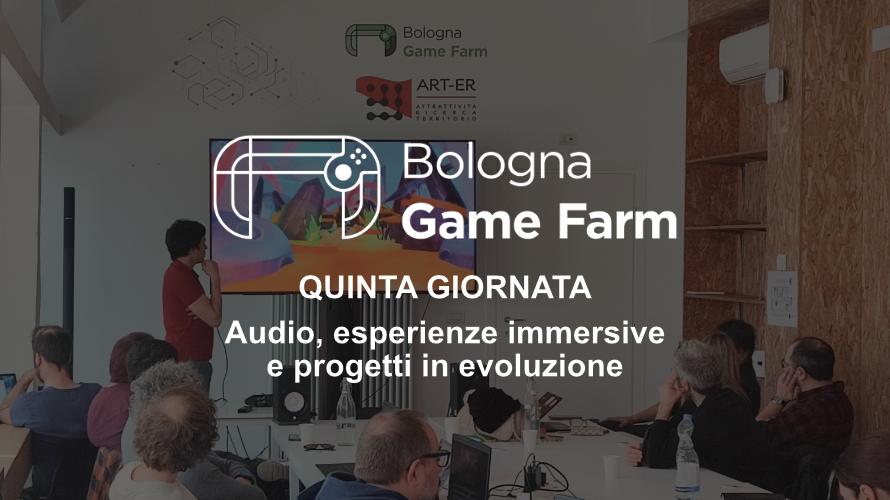
The Art of Sound: among Rhythm, Atmosphere, and Gameplay
Michele Postpischl (Mushroom Sounds) opened the meeting by highlighting how context influences sound design. A comedy title requires a different approach than an action, and audio curation must begin as early as prototyping or writing the cutscene script. Realistic sound isn’t always the most immersive choice: “A sound can be more evocative than its real counterpart if designed with intention.” He explained.
Knowing “subtracting” is also essential to create atmosphere and rhythm, and the use of middleware such as Fmod or Wwise becomes a useful tool for managing sound complexity dynamically and adaptively. Postpischl brought practical examples from games like Untitled Goose Game and Inside, demonstrating how good sound design can shape the player experience.
Davide Pensato (DPstudio) delved into the evocative power of audio in video games, explaining how sounds reinforce the emotional impact of narrative or gameplay scenes. Sound not only characterizes the game universe, but actively supports gameplay, providing the player with often invisible sensory cues.
Pensato illustrated different types of video game music:
Linear, for menus, credits or cutscenes.
Non-linear, changing to
Mood driven: Changes based on the player’s atmosphere, threat level, or life.
Action driven – in-game actions that change music, such as scouting music that turns into combat music when enemies are encountered.
Source music, as diegetic sound elements in the game world (e.g. a radio in game).
In technical detail, we discussed audio triggers, the use of placeholders for voiceover, and the complexities of localization. The choice of middleware or in-house audio systems (such as those offered by Unreal or Unity) must be evaluated based on the team’s needs and the sound designer’s specialization.
Afternoon: recap with accelerating teams
In addition to the training part, the event allowed the teams selected by Bologna Game Farm to show the progress of their titles in view of Press Day on ’8 May and Developparty. There has been some practical advice: preparing the Steam page by Easter, for example, is essential to meet approval times, which average between 7 and 10 days.
Conclusions
Bologna Game Farm 2024 confirms its position as a benchmark for the growth of the Italian video game industry. The focus on sound and its creative, technical, and narrative parts demonstrated how crucial audio is to the development process. Looking forward to the next event, the teams are preparing to bring their games to the press and the public, more ready and aware than ever.